


Read Part 1 here. Sure, drugs like Lovaza, Niacin and Statins will reduce triglycerides. Most people see about a 30% reduction if you follow recommended dosage for Lovaza. Your mileage may vary. If your triglycerides were at 300, Lovaza can get you to 200. But that's still high.
How I cut my Triglycerides by more than half!
This is a personal journey. Your results will certainly vary.
Very high triglycerides run in my family. There are 12-year-olds with 1200 Triglycerides. I wasn't quite that unlucky.
My triglyceride once came in at a scary 666 and stayed between 600 and 700 for 20 years.
Once I turned 40, this started to worry me a little. That was 4 years ago. A couple of years of research and experiments on myself resulted in a 400 point drop in triglycerides.
There is no reason why you can't expect similar results too!
The triglyceride drop didn't happen overnight.
Step 1: Quitting soda and orange juice (daily staples).
Result: TG dropped to about 400 and stayed there. This change in diet made a huge impact.
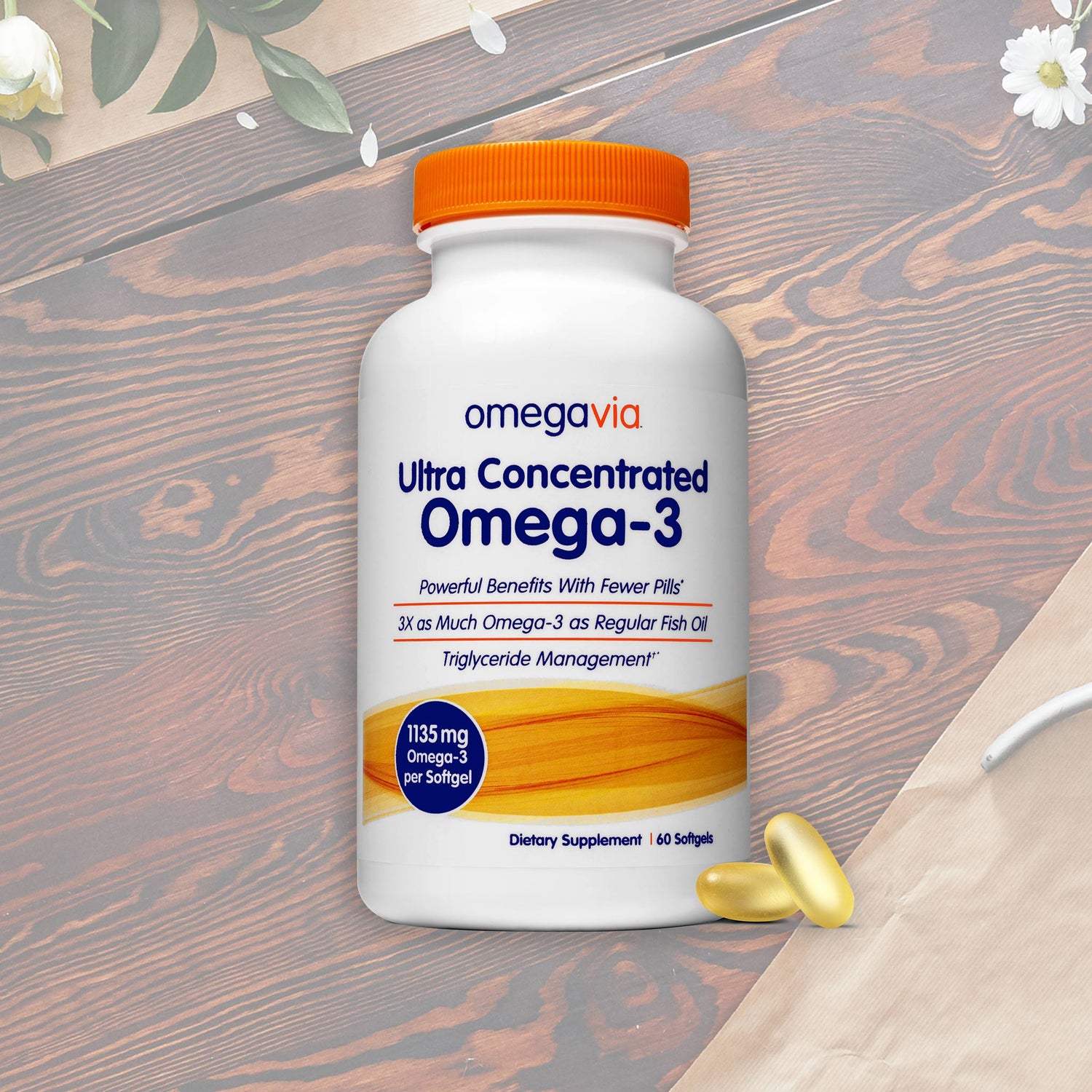
Step 2: I started taking 4,000 mg Omega-3 and exercising vigorously daily.
Result: TG dropped to 250. I was a little disappointed. I was hoping Omega-3 alone would be a magic bullet that fixed the problem for good. Nope. Not for me. Sure, fish oil and daily exercise dropped my triglycerides by over 30%, but that still wasn't enough.
250 was a lot less scary than 666, but 250 is still high.
Individual results may vary.
Step 3: I stopped eating wheat, flour and all grains.
Result: TG dropped to 150. And it will stay there as long as I don't indulge in pastries, beer, wine or fruits.
These three steps did not happen quickly. The whole period took a few years. It took me a few weeks to actually give up Sprite and orange juice. Taking fish oil supplements was the easy part. Still, neither of those changes really affected what I ate.
Giving up wheat and grains was a big change. No more pizza, pasta, bread, breakfast cereals, bagels, cookies and croissants.
You may not need to take such drastic dietary measures. But if you belong to the 25% of population who are sugar-sensitive, folks with an elevated insulin response to sugars and carbohydrates, well, then, you may need to consider a drastic diet change.
Talk to your doctor and find out if you have an elevated insulin response to carbs. If you do, well, Lovaza or fish oil alone may not cut it.
This method for reducing triglycerides is not new. It has worked for others, like Dr. David Diamond, a neuroscientist from the University of South Florida. Please watch his YouTube lecture - it is worth your time. I promise.
The Triglyceride Diet:
What to eat and avoid:
What to avoid:
- sodas
- juices
- grains
- breads
- pasta
- cereals
- flour (baked goods)
- bagels
- cookies
- desserts
- candy
- potatoes
- tortillas
It doesn't matter if the above are natural, organic, whole-grain, steel-cut, multi-grain, sun-dried, super-earthy, extra-crunchy or warm and cuddly. They will all raise your triglycerides and your risk for poor heart health.
Aren't whole grains supposed to be good for you?
'Healthy whole grains' are fine ONLY if you are part of the population that has a 'blunt' response to starches. In other words, there is no spike in insulin after a donut and bagel breakfast. Only 2 or 3 out of 10 people fall in this lucky group.
Makes you wonder why everyone is pushing whole grains like it's the next best thing since sliced bread mom and apple pie.
Whole grains are not for everyone. If you're reading this, chances are it's not for you.
There are several studies that show people who switched from white, refined flour to whole grains significantly improved their risk for heart health and diabetes. True. If you have a high triglyceride problem, this is like switching from unfiltered cigarettes to filtered cigarettes. Scary analogy, but you get my point...
What's OK to eat:
- vegetables (steamed or sautéed in olive oil)
- meats (preferably grass-fed and pastured)
- seafood
- eggs
- fruits (moderate amounts, with a focus on dark berries)
- nuts
- generous amounts of olive oil
Go ahead and add dark chocolate and cheese if you want some snack variety. And may be coconut oil if you want something new.
Why it's Important to Limit Starch (Carbs)
By now, you get the connection between carbs and triglycerides.
OK, so what?
So...
- High triglycerides allow your liver to make more VLDL (very low density lipoprotein.) Not good.
- VLDL makes your LDL (bad) cholesterol smaller. Smaller the LDL size, nastier they are. Not good at all.
- Small LDL is the beast that causes plaque formation in your artery wall. Yikes.
Meats and fats are not evil. Hard to believe? Read the science for yourself here.
Replacement of saturated fat by carbohydrates, particularly refined carbohydrates and added sugars, increases levels of triglyceride and small LDL particles and reduces high-density lipoprotein cholesterol, effects that are of particular concern in the context of the increased prevalence of obesity and insulin resistance. - Current Atherosclerosis Reports
It's sugar and starch that spike your triglycerides and THAT'S what you need to watch out for!
Different Ways to View the Triglyceride Diet:
1. Eat only whole foods found naturally in nature.
A tomato is a whole food. Ketchup isn't.
An orange is a whole food. Orange juice isn't.
Peanuts are whole food. Peanut butter isn't.
Beef is a whole food. Jerky isn't.
You get the idea.
2. Eat only foods sold around the outer walls of your grocery store.
Avoid all the aisles along the middle of your grocery where processed foods are. No, it's not a coincidence that the stuff that's good for you are farthest away from the front door. These are low-profit items. The juicy profits are in packaged and processed foods in the middle of the grocery store. But that's a rant for another day.
3. Do not eat anything that comes out of a box, can or a bag.
Just about every processed food is packaged this way. Nothing healthy ever came in a printed box!
4. Only eat foods that will go bad in a few days or weeks.
Talk to Your Doctor!
Find out how your insulin levels react to starches. Find out if you should take statins, Lovaza or Niacin.
Here's a chart from the Harvard Heart Letter that outlines medical options for triglycerides.
Sure, these drugs work. But remember, you may not be addressing the root cause of the problem. Drugs usually just hide the symptoms. Someone once told me that if Tylenol gets rid of headaches, a headache does not mean you have Tylenol-deficiency.
Address the root cause and the problem will go away for good.
The answer is in the Produce section, not the Pharmacy.
* Clinical research suggests the omega-3 dosage needed to help maintain healthy triglycerides is 2000-3000 mg per day when used as part of healthy diet and exercise regimen. These statements have not been evaluated by the Food and Drug Administration. This product is not intended to diagnose, treat, cure, or prevent any disease.
