In Part 1 of this article, we talked about the importance of Omega-3 in your dog's diet and the potential issues caused by Omega-3 deficiency.
We also talked about the #1 reason why most dogs suffer from Omega-3 deficiency.
Before you run out and buy fish oil for your dog, there are a couple of minor dietary changes you should make. These changes will make Omega-3 supplements more effective.
First, you need to cut back Omega-6 from their diet.
STEP 1: Reducing Omega-6
Watch out for the following ingredients in dog food:
Corn oil
Vegetable oil (soy oil)
Sunflower oil
Safflower oil
If you see any of these oils listed in the ingredient, DO NOT BUY the food. These oils are very high in Omega-6.
You need to REDUCE Omega-6 for Omega-3 to be fully effective.
If any dog food says “Excellent source of Omega 3 & 6,” then you know the manufacturer either does not know about the ill-effects of Omega-6 and/or thinks you don’t know. They should not be passing off Omega-6 as a good thing when there is already too much of it in dog foods! That’s what many brands are doing by proudly claiming high amount of Omega-6.
Omega-6 fats get converted to compounds that irritate your dog’s skin and joints.
Some brands list the Omega-6 to Omega-3 ratios. Many have 10 or 20 times more Omega-6 than Omega-3. This is not good. You need to get close to 3 or 4 parts Omega-6 to 1 part Omega-3.
A little bit of Omega-6 is necessary for canine health, but too much is BAD!
Real-life Examples:
Canidae is considered a good brand but its All Life Stages has a 7.4 to 1 ratio of Omega-6 to 3. That’s too high.
Many people consider Hill’s Science Diet to be an acceptable dog food, but they don’t list how much Omega-6 or 3 is present. The #1 ingredient in their Active Adult formula is Ground Whole Grain Corn. What the heck is corn doing there?
STEP 2: Buy all-natural foods that are made from grass-fed animals or fish
Corn meal or any other grain meal has no place in dog foods.
Dogs are related to wolves. Have you ever seen or heard of a wolf eating corn?!
Whole grains is not a good thing! Dogs are carnivores – they have no business eating whole grains.
The best dog foods are home-made or fresh-frozen raw foods (see below).
STEP 3: Look for the right Omega-3
If the label says ‘Omega-3’ in big letters but Flaxseed oil is listed as the source of Omega-3, then it's almost useless.
Omega-3 from Flaxseed oil is often listed as Alpha-Linolenic Acid – dogs do not absorb these very well. Avoid dog foods with Flaxseed or Flaxseed oil.
If the label says 'Omega-3' and fish or flax oil is listed at the end of the ingredients list, there is not much Omega-3 in there. Ingredients are listed in descending order by weight.
Look for foods with ‘long chain Omega-3’ such as EPA and DHA Omega-3. These are the Omega-3 found in fish oil and dogs can easily absorb them.
STEP 4: Start supplementing your dog’s diet with fish oil pills
Avoid Cod Liver Oil – this has too much Vitamin A and D, which could get toxic at high levels.
Feed a little wild salmon or liquid fish oil or fish oil pills with meals.
If you give your dog fish oil pills, go for the high quality human supplements.
If your dog is picky, wrap pill in peanut butter, bacon, sausage or cheese to get them to eat it.
Start slow – too much fish oil will give some dogs an upset stomach.
It’s easy to overdose with a liquid fish oil supplement so it is particularly important to start off with a small amount.
Giving your dog fish oil supplements is a great idea, but ONLY AFTER you've made the dietary changes listed in Steps 1 thru 3. Fish oil supplements only add Omega-3 to their diets, but a healthy, natural diet will address many other health issues that Omega-3 cannot do by itself.
How long before I notice a difference?
You will notice a difference in your dog's health in 10 to 14 days, with most benefits becoming obvious in about a month. If your dog has allergies or some inflammatory condition, you will notice a decrease in itching, scratching and red or irritated skin.
So what do what does my dog, Bailey, eat?
He gets a blend of Stella & Chewy’s raw lamb and Orijen and Acana brand kibble.
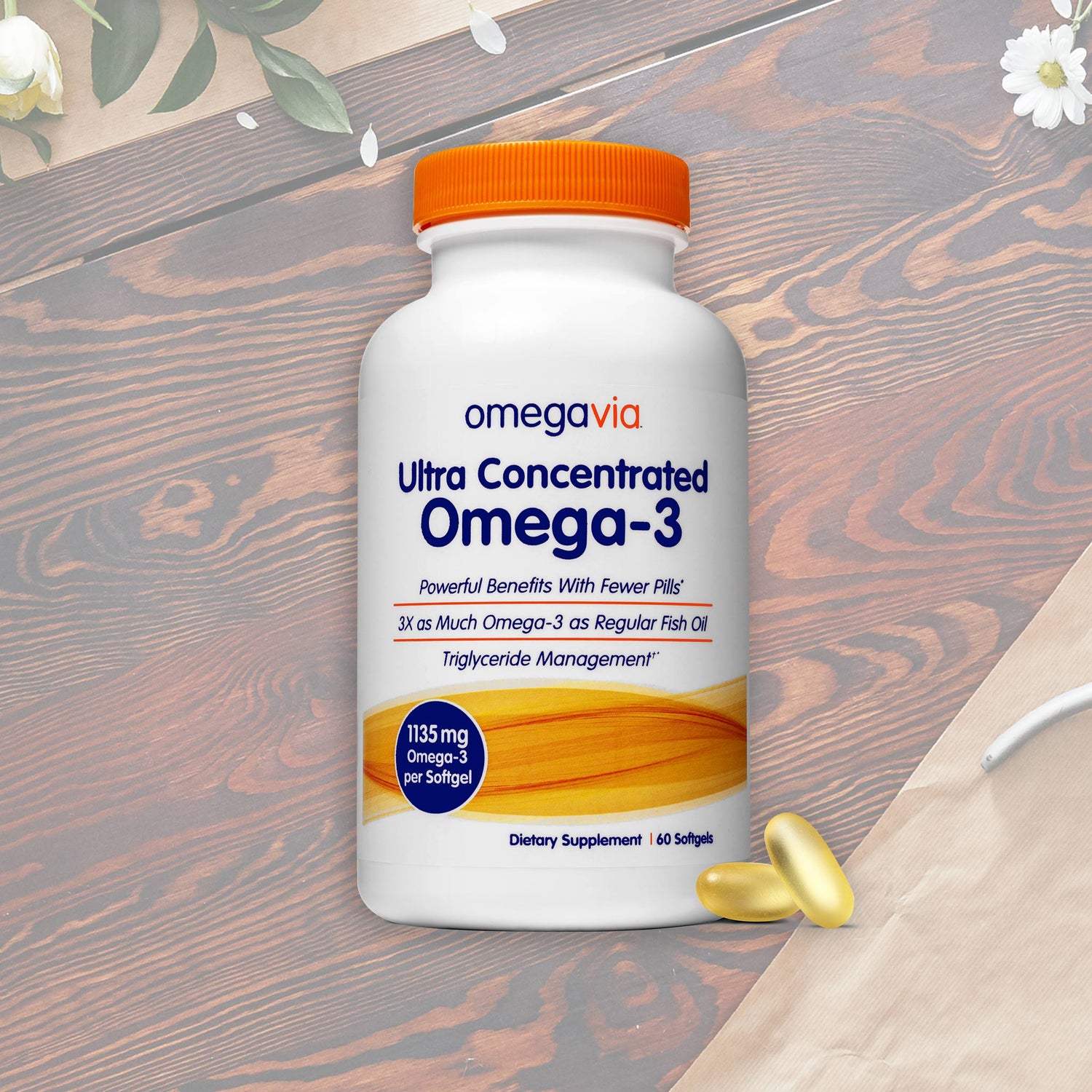
And, of course, he gets an OmegaVia pill dipped in peanut butter every day. If he’s been really good, I smear some peanut butter on his nose.
Our Bailey is 12 years old and still bounces like a puppy. Walking doesn’t tire him anymore, so he runs alongside me while I go bicycling around streets and hiking trails of Calabasas, California.
Need Professional Help?
If you need the help of an expert, contact Nadine M. Rosin for a consultation at The Healing Art of Pet Parenthood. Nadine is a certified holistic pets/toxin-free lifestyle consultant whose own dog lived to be 19 with a purely holistic protocol after being given just 6 weeks to live at age 8 with a cancer diagnosis.
Schedule a one-on-one consultation with Nadine here.
Choosing a selection results in a full page refresh.



 He gets a blend of Stella & Chewy’s raw lamb and Orijen and Acana brand kibble.
And, of course, he gets an OmegaVia pill dipped in peanut butter every day. If he’s been really good, I smear some peanut butter on his nose.
Our Bailey is 12 years old and still bounces like a puppy. Walking doesn’t tire him anymore, so he runs alongside me while I go bicycling around streets and hiking trails of Calabasas, California.
He gets a blend of Stella & Chewy’s raw lamb and Orijen and Acana brand kibble.
And, of course, he gets an OmegaVia pill dipped in peanut butter every day. If he’s been really good, I smear some peanut butter on his nose.
Our Bailey is 12 years old and still bounces like a puppy. Walking doesn’t tire him anymore, so he runs alongside me while I go bicycling around streets and hiking trails of Calabasas, California.
